
GLP vs GMP water system expectations: What contract labs need to know
Water quality is the bedrock of effective laboratory operations. From routine analytical tests to pharmaceutical quality assurance, it’s a critical utility that is central to accurate results and ensuring confidence in scientific outcomes.
With that said, the regulatory expectations surrounding water purification are multi-faceted, with different requirements falling under Good Laboratory Practice (GLP) or Good Manufacturing Practice (GMP).
The differences between GLP and GMP
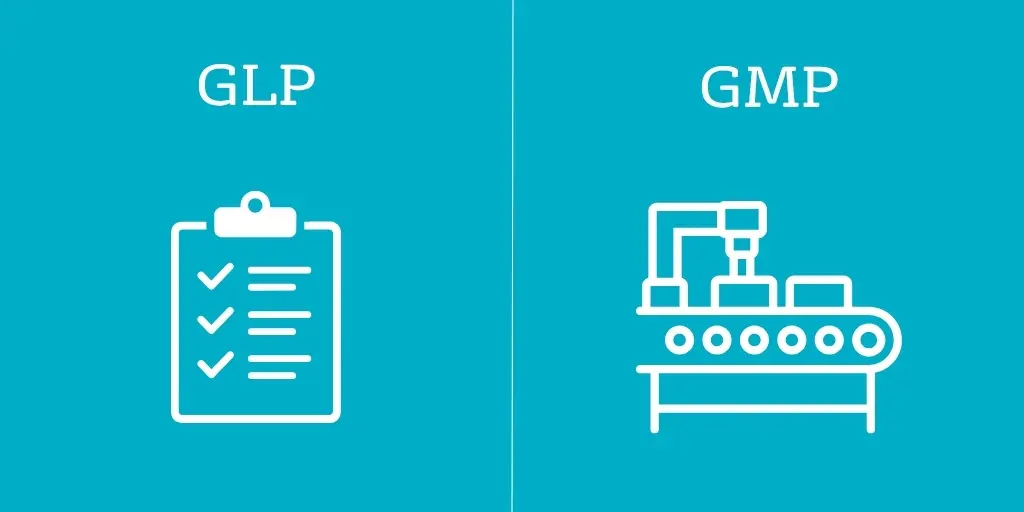
While both GLP and GMP are designed to ensure quality and consistency, to which the reliability of water in lab environments applies, each regulation serves a different purpose.
As its name suggests, GLP was established to ensure that best practices are adhered to in laboratory environments. Rather than being prescriptive in how scientific experiments are carried out, it outlines key quality standards that ensure researchers follow key protocols and record and report their findings properly. A major part of the regulation is ensuring that studies are conducted in a controlled manner, so that any results are not only accurate but also reproducible and defensible.
GMP, on the other hand, is focused on the manufacture and quality control of products. It’s particularly relevant in industries such as pharmaceutical, medical device, food, and cosmetic manufacturing, placing a significant emphasis on minimising risks such as contamination during the production of critical goods.
In this sense, GLP supports research and testing activities where data integrity and study reliability are critical, whereas GMP focuses on the manufacture and quality control of products.
What GLP means for laboratory water systems
GLP requires laboratories to demonstrate that water quality is suitable for its intended use and that the quality is controlled, documented and reproducible.
Of course, water requirements can vary, with research laboratories and analytical testing facilities requiring different grades of purified water depending on the tests being carried out. High-performance applications such as HPLC, LC-MS and molecular biology techniques typically require Type I ultrapure water, while other laboratory processes may use Type II or Type III water. We cover this in more detail in this blog.
What is necessary is the ability of laboratories to demonstrate that their water is purified to the necessary standards reliably for each relevant application. They must also show that purification systems are properly maintained.
Here, routine monitoring, scheduled servicing, calibration checks and documented maintenance activities are often sufficient for GLP, enabling laboratories to establish thorough records and show reliability in the data generated.
What GMP means for laboratory water systems
Laboratory water quality expectations under GMP are arguably more stringent.
As well as ensuring that the quality of the water used meets the required standards and is verifiable, laboratories must also demonstrate that the entire water purification system has been properly designed, installed, qualified and maintained.
Key considerations here include a comprehensive risk assessment during system selection and installation, and the implementation of appropriate controls to ensure ongoing compliance. Critically, every aspect must be traceable and defensible – from maintenance activities and system adjustments to replacements and performance monitoring.
Here, GMP-regulated facilities must consider how water quality data is captured, with electronic records both being securely managed and providing adequate audit trails to ensure compliance and system performance can be demonstrated as needed.
Understanding IQ, OQ and PQ
One of the biggest differences between GLP and GMP that contract labs should be aware of is the latter regulation’s structured qualification methodology, known as Installation Qualification (IQ), Operational Qualification (OQ) and Performance Qualification (PQ).
- IQ verifies that the system has been installed correctly, such as in alignment with approved specifications and manufacturer recommendations.
- OQ then confirms that the system operates within defined conditions, with controls and monitoring functions in place to ensure that it performs correctly.
- PQ is then used to demonstrate that a system consistently delivers the required quality during operations. In the case of water, this would be used to check, validate and record water purity on an ongoing basis.
Contract laboratories and pharmaceutical testing facilities must adhere to each of these checks to meet the requirements of GMP, considering IQ, OQ and PQ from the outset. Indeed, alignment with IQ, OQ and PQ validation frameworks confirm that a system has been installed, functions and performs as intended.
Choosing the right water purification system
For many organisations, particularly startups and growing contract laboratories, it’s important to select a water purification system that can stand up to both GLP and GMP to ensure future scalability.
A laboratory that currently operates within a GLP framework may eventually move into GMP-regulated testing. Likewise, a CRO may expand its service offering to support pharmaceutical clients, which would come with increasingly stringent compliance expectations.
In this sense, adaptability is an important consideration. A system that is adequate for a small research laboratory today may become a limiting factor as operations develop.
The most effective approach is often to select a solution that delivers reliable performance while providing an easy way to adapt to meet different compliance requirements. With the level of control, documentation and validation required for water purification systems varying between GLP and GMP, it’s important that contract labs can meet each regulation’s requirements as needed.
Here is how Purite can help. We support contract laboratories, CROs and pharmaceutical organisations across the GLP and GMP water purification spectrum, from early-stage research facilities and startups through to established pharmaceutical manufacturers.
As a leading provider of advanced laboratory water purification systems in the UK, we design and develop a range of solutions capable of delivering Type I, II and III water for a wide range of scientific applications – all supported by installation, commissioning, training and technical services.
To find out more about how we can support you with GLP and GMP requirements and make the path from research to regulated operations considerably smoother, reach out to us today.